
Worth County Arrest Records and Charges
Worth County arrest records start with the law-enforcement event. The arresting officer, jail intake staff, and Sheriff records may show the person's name, arrest date and time, officer, bond, and booking-level charge list. Worth County's official inmate portal is the most visible public channel for current custody records because the Sheriff's "Current Inmate Charges and Bonds" page points users to OffenderIndex for Worth County.
The court charge record is a different file. After an arrest, the Tifton Judicial Circuit District Attorney, Court Solicitor, or another proper prosecutor decides what formal accusation should be filed. The case may then move through Magistrate, State, or Superior Court depending on the charge. The full case file and outcome belong with Worth County criminal court records, while custody detail and booking tabs belong with Worth County inmate records.
The official Worth County inmate portal is the source shown in the manifest for booking-level charge access.
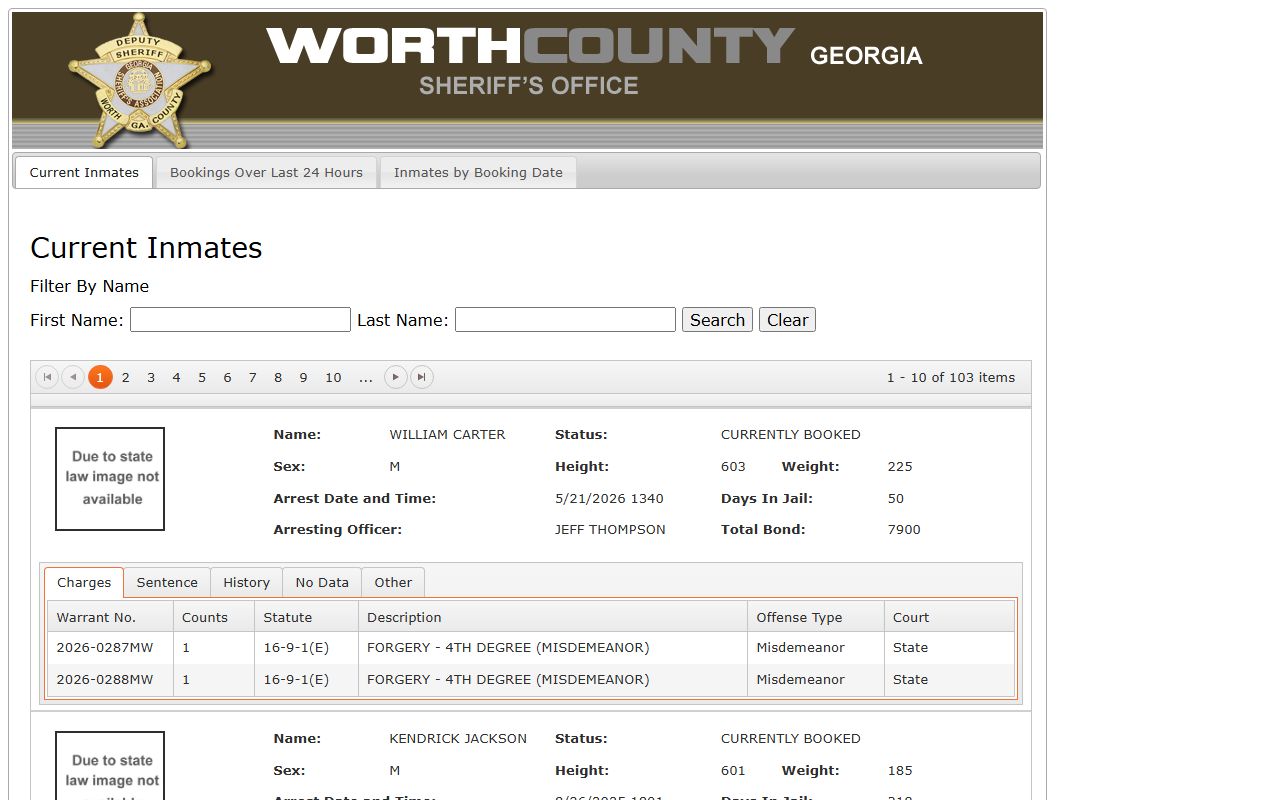
That portal is useful for custody and bond context, but it should be checked against the court record before treating a charge as filed, amended, or disposed.
Find Worth County Arrest Records
There is no single Worth County arrest records database that replaces every official office. Start with the channel that matches the question. Current custody and booking charges are checked through OffenderIndex. Court charges after arrest are checked through the Clerk of Courts, Magistrate Court, State Court, Superior Court, or the prosecutor, depending on whether the charge is a warrant application, misdemeanor, traffic offense, or felony.
Worth County Sheriff's FAQ adds a practical split after booking. Felony case-status questions are directed to the District Attorney, while misdemeanor cases and traffic tickets are directed to the Court Solicitor's Office. The research notes that the DA phone number appears differently in separate Worth County sources, so callers should confirm the correct local number through the courthouse when a felony charge has moved beyond the jail roster.
- Open the Worth County inmate portal when the question is whether a person is in jail, recently booked, or listed with booking charges and bonds.
- Use the person's first and last name, or the booking-date tabs, to find the public custody entry if one is shown.
- Read the Charges tab for warrant number, charge text, type, statute, count, court, and sentence fields when the portal displays them.
- Confirm the filed court charge with the Clerk of Courts, Magistrate Court, State Court, Superior Court, DA, or Solicitor before relying on the result.
- For older statewide custody or prison records, use the Georgia Department of Corrections offender search, which is separate from the county jail roster.
The Sheriff's FAQ also points people with felony case-status questions to the District Attorney and misdemeanor or traffic questions to the Court Solicitor's Office. The research notes a phone-number conflict for felony status inquiries, so courthouse confirmation is the sound path when a charge has moved beyond booking.
Charges After Arrest in Worth County
Charges after arrest become a court matter when the proper charging document is filed. Georgia practice in Worth County uses terms that can overlap in daily speech, so the document type matters. A warrant or booking charge may explain why a person was held. A later accusation or indictment may define the formal charge that the court will hear. A felony generally routes to Superior Court, while misdemeanors and traffic matters may route to State Court or municipal court.
| Document | Who Uses It | Worth County Context | What to Check |
|---|---|---|---|
| Complaint or warrant application | Law enforcement, citizen applicant, or prosecutor | Magistrate Court has arrest and search warrant jurisdiction, plus a pre-warrant process. | Applicant, respondent, alleged offense, probable-cause hearing, and judge action. |
| Accusation or information | Prosecutor | Often tied to misdemeanor or prosecutor-filed criminal matters after screening. | Filed charge, court, count, statute, plea date, and disposition. |
| Indictment | Grand jury | Used for serious felony charges handled in Superior Court within the Tifton Judicial Circuit. | Count numbers, felony offense, arraignment, motions, plea, trial, or sentence. |
The Georgia Department of Corrections Worth County Jail location page documents the local jail as a recognized custody point in the state system.
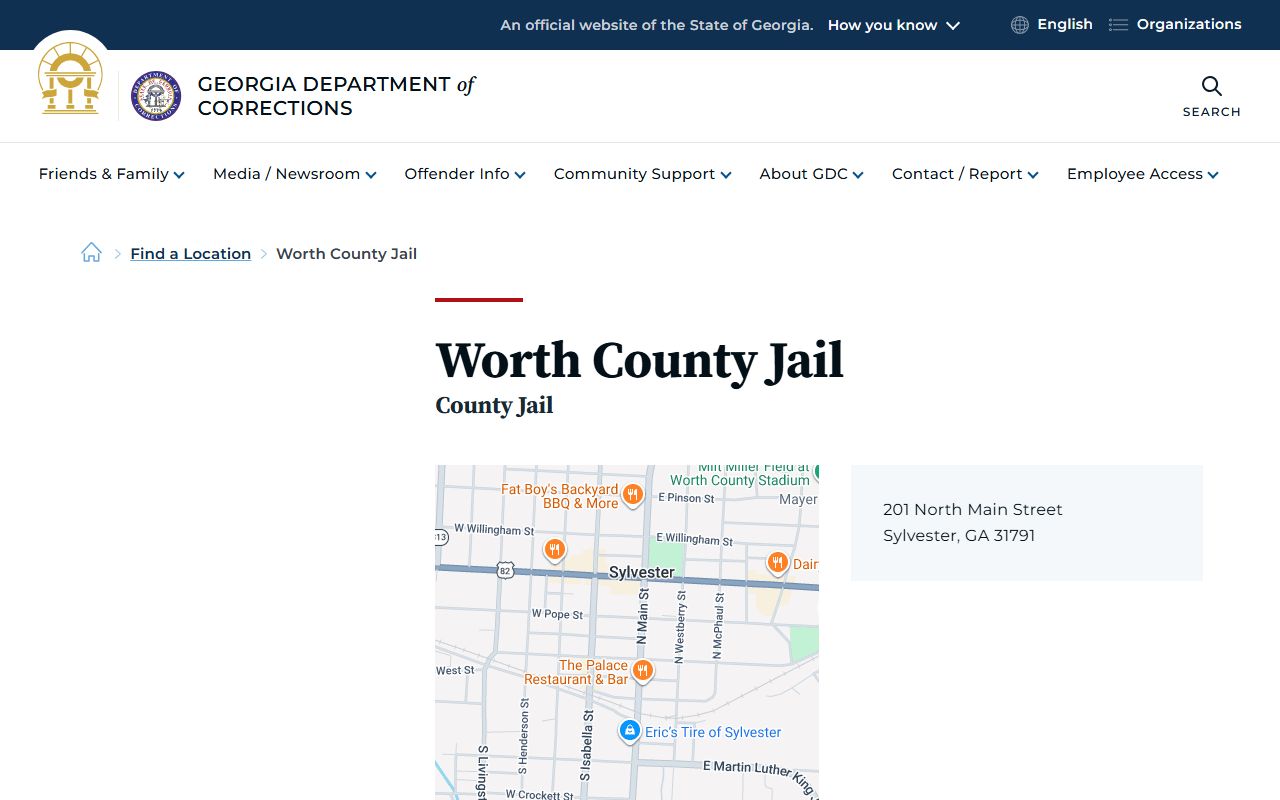
Local jail information helps identify the custody source, but the filed charging document still has to be verified with the correct court or prosecutor.
Worth County Charge Status
A charge can change after the first arrest record appears. Prosecutors may add, reduce, amend, or decline counts. Courts may dismiss a count, dead docket it, accept a plea, or enter a sentence. Georgia records also use "nolle prosequi" for a prosecutor's decision not to proceed on a charge. Each count should be read on its own because one arrest can produce several charges with different outcomes.
Charge status can also be split across agencies. The Sheriff's Office may show the booking charge and bond. The Clerk may show a filed criminal case or warrant. The prosecutor may know whether an accusation, indictment, reduction, or nolle prosequi has been filed. A final answer often requires matching the jail entry to the court case number or filed charge.
| Status | What It Means | Where to Confirm |
|---|---|---|
| Pending | The charge has not reached a final disposition. | Court clerk, court calendar, or prosecutor. |
| Amended or reduced | The filed charge changed from the first version or was lowered to another offense. | Filed accusation, indictment, plea paperwork, or order. |
| Dismissed | The court has ended that count without a conviction on that count. | Disposition entry or signed order. |
| Nolle prosequi | The prosecutor chose not to proceed on that charge. | Prosecutor filing and clerk disposition. |
| Dead docket | The case is inactive in Georgia practice but not always erased or dismissed. | Superior Court or prosecutor record. |
Note: A booking charge may stay visible in one system after a court count has changed in another system.
Charge vs Conviction
A Worth County charge is an allegation or filed count. A conviction is the result of a guilty plea, verdict, or other qualifying court disposition. This difference is critical for job, housing, licensing, and personal record review. A person can have an arrest and a charge without a conviction. A person can also have several counts from one arrest, with one count dismissed and another count resolved by plea.
| Point | Charge | Conviction |
|---|---|---|
| Stage | Filed after arrest or warrant screening. | Entered after plea, verdict, or final disposition. |
| Proof level | May begin with probable cause or prosecutor review. | Requires a court result, not just booking data. |
| Where it appears | Jail charge tab, warrant record, accusation, or indictment. | Disposition, sentencing, probation, fine, or DDS reporting for traffic. |
| Risk of error | May be amended or dropped later. | May still need certified proof from the clerk. |
Statewide Charge Lookups
Worth County arrest records do not replace statewide offender or criminal-history channels. The Georgia Department of Corrections search is for state-sentenced inmates and supervised offenders, not current Worth County jail custody. The Georgia Bureau of Investigation handles Georgia criminal-history record restriction guidance under O.C.G.A. 35-3-37. Federal custody is separate again through the Bureau of Prisons inmate locator.
The Georgia Department of Corrections source shown in the manifest is useful when a local arrest has resulted in state custody or supervision.
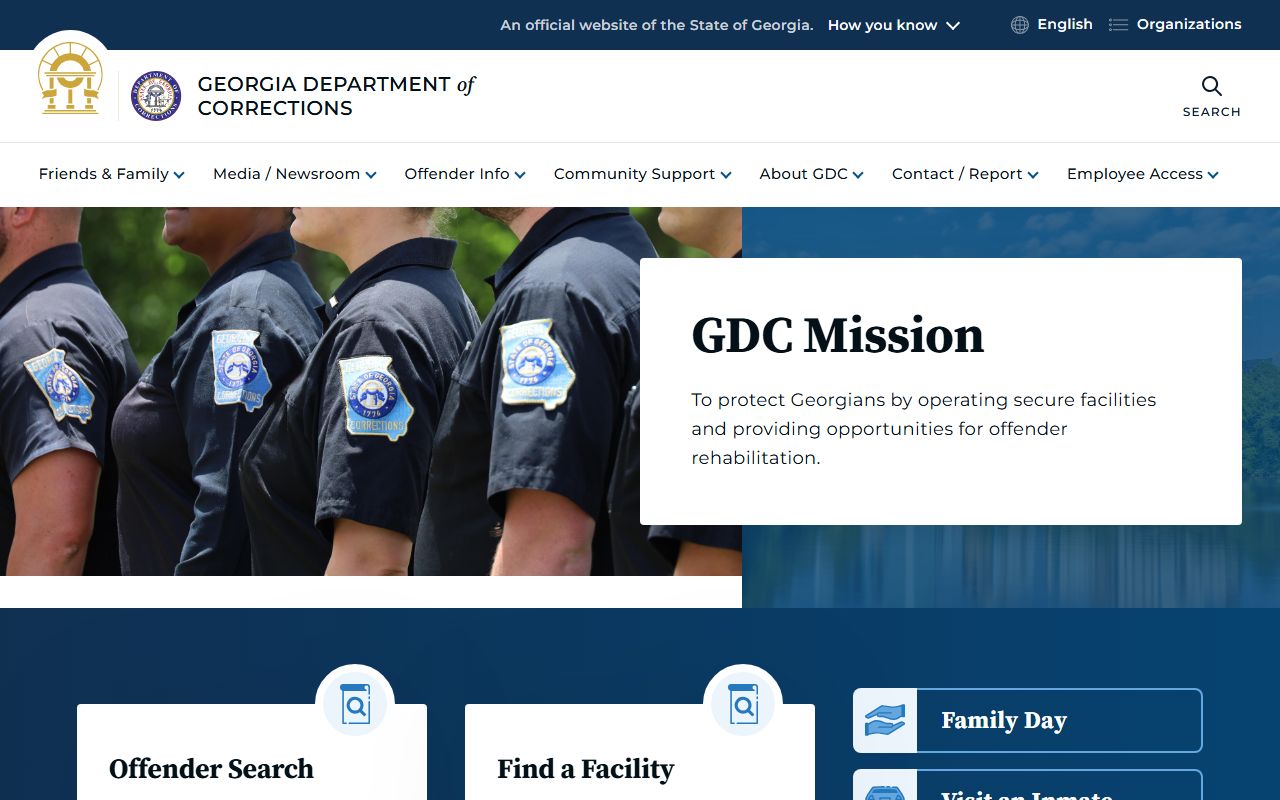
State custody data can confirm later incarceration, but the original Worth County charge status still belongs with the court, prosecutor, or clerk record.
The Federal Bureau of Prisons inmate locator is a separate source for federal custody after a federal conviction or detention.
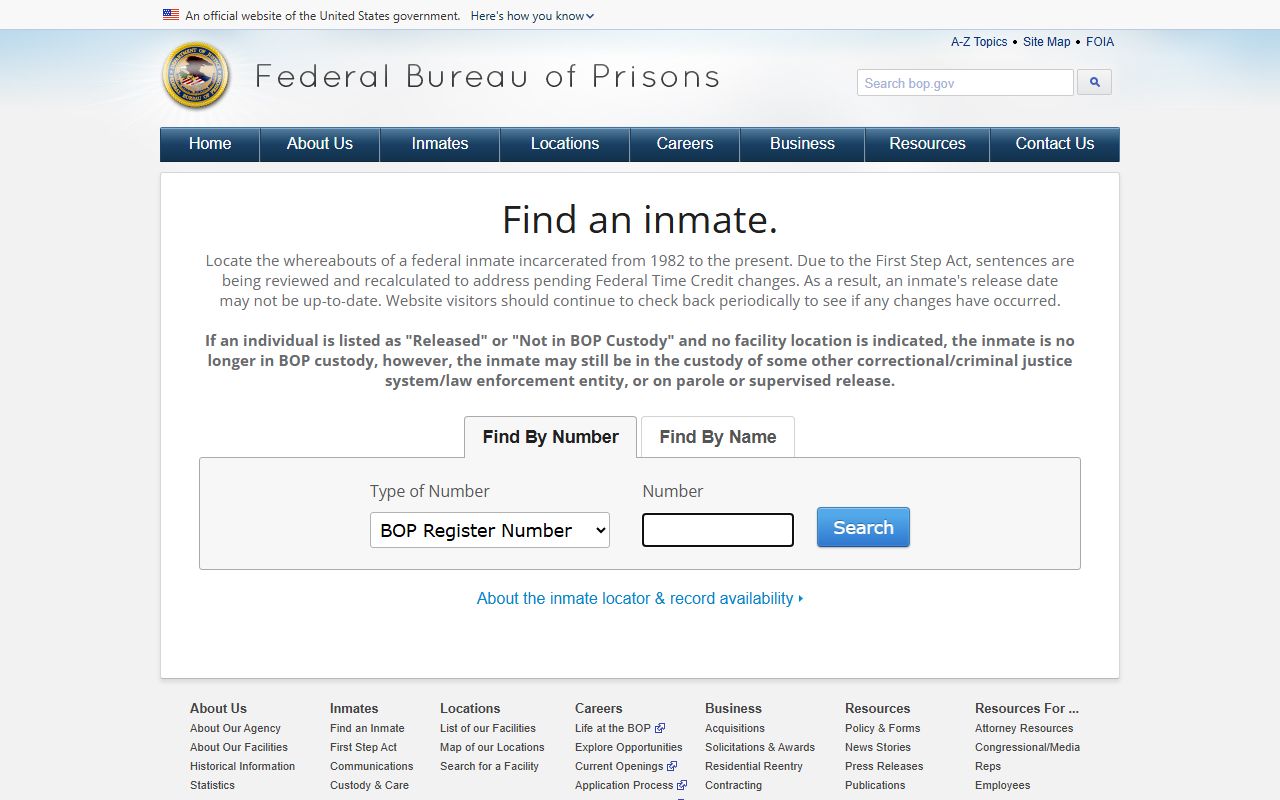
Federal lookup results should not be read as a Worth County court charge record unless the local case number and court disposition are also confirmed.
The same caution applies to casual background checks. A statewide offender result, a local booking entry, and a court disposition answer different questions. If the purpose is to learn whether a Worth County arrest produced a filed charge, the best evidence is the court file or prosecutor status. If the purpose is to learn whether a person is in current custody, the jail roster is the better first source. If the purpose is to learn whether a conviction appears in a criminal-history system, the GBI restriction guidance and the proper criminal-history process become more relevant.
Restricted Worth County Charge Records
Georgia public-record law starts from an open-records presumption, but not every arrest, warrant, or charge file is open to every requester. Juvenile matters, adoption files, mental-health matters, sealed warrants, protected identifiers, and active investigations can be withheld or redacted. Uniform Superior Court Rule 21 also recognizes public access to court files unless law or court procedure limits access.
Georgia uses the term "record restriction" for many criminal-history limits. For arrests after July 1, 2013, the research points to the prosecutor for restriction questions. For older arrests, the person starts with the arresting agency. A restriction may limit criminal-history access, but it may not erase every court file, jail entry, prosecutor file, or vendor record at the same time.
Sealed and restricted are not the same in day-to-day record review. A sealed court file is hidden from ordinary public view by law or court order. A Georgia criminal-history restriction limits access to certain criminal-history records for non-criminal-justice purposes. A dismissed charge can still require follow-up if the jail roster, prosecutor file, GCIC entry, or court docket has not updated. Worth County users should keep the final disposition, arrest date, agency, charge, and case number together before asking for correction or restriction review.
Important: Do not treat a dismissed charge as removed from every Worth County, Georgia, or vendor system.